
Guide
Context is Key for Caregivers and People Receiving Care
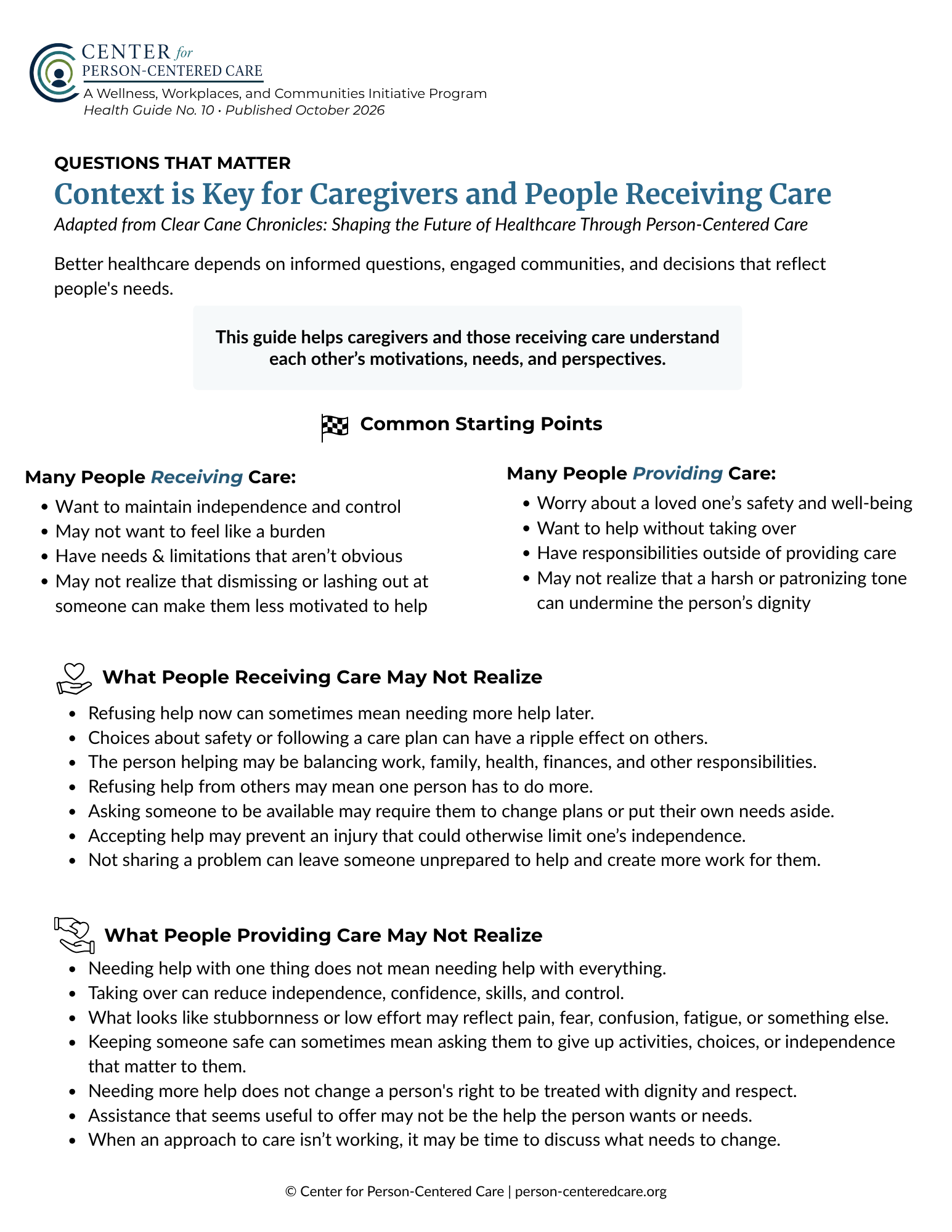
This guide helps caregivers and people receiving care better understand each other’s needs, motivations, and perspectives. It highlights things each person may not realize about the other and offers practical questions and conversation starters for discussing what help is needed, what each person can realistically do, and what may need to change.
Primary audience: People receiving care and family members, friends, and others who provide support.
Additional audiences: Healthcare professionals, social workers, care coordinators, patient advocates, and community organizations supporting patients and caregivers.
Topics Covered
- Understanding what people receiving care may not realize about those providing care.
- Understanding what people providing care may not realize about those receiving care.
- Considering what help is needed, what each person can realistically do, and what the person receiving care wants to continue doing independently.
- Talking about what is working well and what is not going as expected.
- Adjusting support as needs and circumstances change.
- Recognizing when the person providing care may need a break or additional support.
Why This Resource Matters
Giving and receiving care can be complicated. The person receiving care may want to maintain independence, avoid feeling like a burden, or have needs and limitations that are not obvious. The person providing care may be concerned about safety, trying not to overstep, and balancing caregiving with work, family, health, finances, and other responsibilities.
Neither person automatically knows what the other needs, wants, or can realistically do. Honest and respectful conversations can help both people understand what is working, what needs to change, and what kind of support works for both.
What's Inside
- Common Starting Points
- What People Receiving Care May Not Realize
- What People Providing Care May Not Realize
- Talking About Care Together
- Continuing the Conversation
- Remember to Plan for Breaks
Download the Resource
Formatted PDF
Includes graphics and layout.
Download PDF of Context is Key for Caregivers and People Receiving Care (PDF, opens in a new tab)Accessible Version (Google Doc)
Designed for use with assistive technology.
Open Accessible Version (opens in a new tab)Additional Resources from Other Organizations
- CareYaya (opens in a new tab)
Connects families with student caregivers who provide nonmedical support, including companionship, mobility assistance, meal preparation, light housekeeping, errands, and other forms of everyday assistance.
- Caregiving at Home: A Guide to Community Resources (Family Caregiver Alliance) (opens in a new tab)
Provides guidance for identifying caregiving needs, considering the preferences and independence of the person receiving care, determining what family and friends can realistically provide, and finding additional community-based support.
- Communication Tips for Caregivers (American Heart Association) (opens in a new tab)
Offers practical strategies for caregivers to communicate with the person receiving care, family members, and healthcare professionals, including listening, discussing needs openly, navigating changing roles, and approaching difficult conversations without blame.
- Medicare Care Compare (opens in a new tab)
Compare rehab facilities and more.
Continue Learning
Keep exploring with another resource from the Center for Person-Centered Care.
Guide
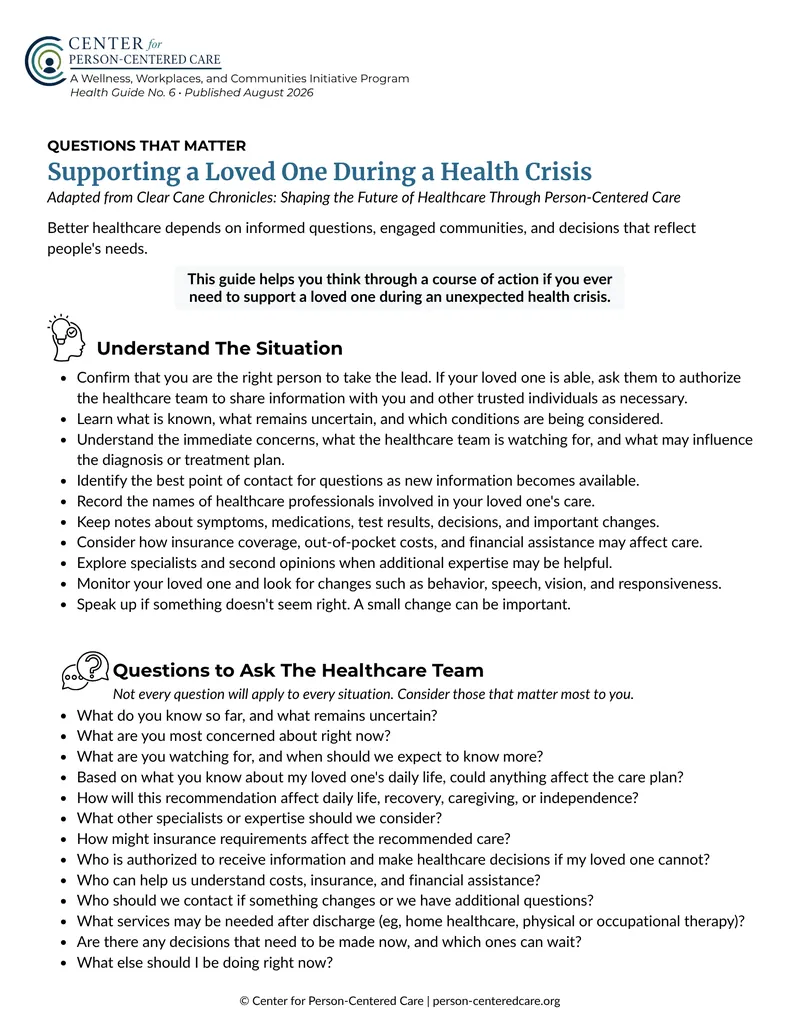
Supporting a Loved One During a Health Crisis
Learn practical ways to understand the situation, ask informed questions, communicate with the healthcare team, and keep your loved one’s needs, priorities, and everyday life at the center of care.
Explore Resource: Supporting a Loved One During a Health CrisisHonest and respectful conversations reveal each person’s needs and help them find support that works for both.
The Health Guides, Visual Snapshots, and Clinical Practice Resources were reviewed by a physician for clinical accuracy and by other reviewers to improve readability, clarity, and ease of understanding.
Back to the Resource Hub