Clinical Practice and Education Resource
Person-Centered Care: Helping Clinical Expertise Work Better for Everyone
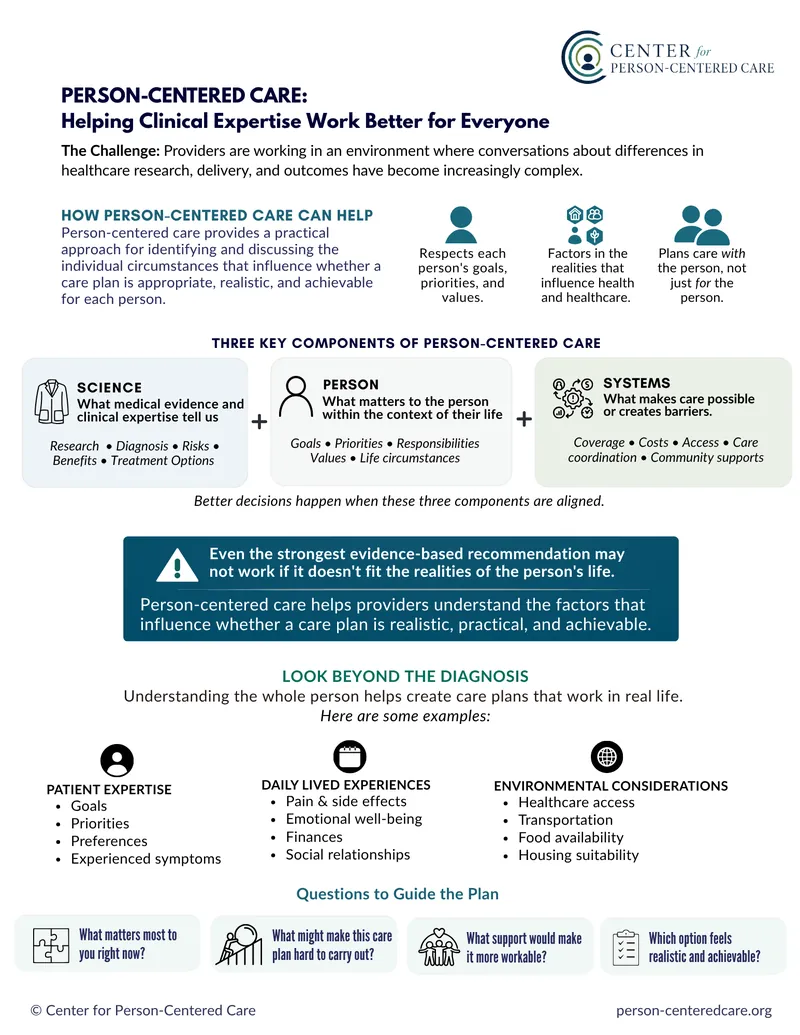
This visual explains how person-centered care combines clinical expertise, individual circumstances, and healthcare systems to create care plans that are realistic, practical, and achievable. It introduces the three key components of person-centered care and provides a framework for incorporating the whole person's life into clinical decision-making.
Primary audience: Healthcare professionals, healthcare leaders, educators, and students.
Additional audiences: Researchers and anyone interested in understanding how person-centered care improves healthcare decision-making.
Topics Covered
- How person-centered care helps providers tailor clinical expertise to each person's circumstances so care plans work in real life.
- The three key components of person-centered care—science, the person, and healthcare systems—and how better decisions happen when they are aligned.
- Why effective care respects each person's goals, priorities, and values.
- Why care should be planned with the person, not just for the person.
- How even the strongest clinical recommendation may not work if it doesn't fit the realities of the person's life.
- How patient expertise, daily lived experiences, and environmental considerations inform realistic and achievable care plans.
Why This Resource Matters
Clinical recommendations often fail because they do not account for the realities of a person's life. This resource demonstrates how integrating clinical expertise with patient priorities, daily lived experiences, and system factors leads to care plans that are more realistic, practical, and achievable.
What's Inside
- Person-Centered Care
- Clinical Expertise
- The Three Key Components of Person-Centered Care (Science, Person, Systems)
- Patient Expertise
- Daily Lived Experiences
- Environmental Considerations
- Questions to Guide the Plan
- Realistic and Achievable Care Plans
Download the Resource
Formatted PDF
Includes graphics and layout.
Download PDF of Person-Centered Care: Helping Clinical Expertise Work Better for Everyone (PDF, opens in a new tab)Additional Resources from Other Organizations
- Agency for Healthcare Research and Quality (AHRQ) – Putting Shared Decision Making into Practice (opens in a new tab)
Learn practical strategies for implementing shared decision-making in clinical practice, including leadership engagement, implementation teams, workflow integration, communication techniques, and evaluation tools that strengthen person-centered care.
- Agency for Healthcare Research and Quality (AHRQ) – Guide to Patient and Family Engagement in Hospitals (opens in a new tab)
Explore evidence-based strategies and practical tools that help healthcare organizations partner with patients and families to improve communication, care planning, safety, and quality, complementing person-centered care principles at the organizational level.
- Institute for Patient- and Family-Centered Care (IPFCC) (opens in a new tab)
Explore practical frameworks, case studies, and implementation resources that help healthcare organizations strengthen partnerships with patients and families and embed person-centered approaches into everyday care.
Continue Learning
Keep exploring with another resource from the Center for Person-Centered Care.
Partnership Assessment
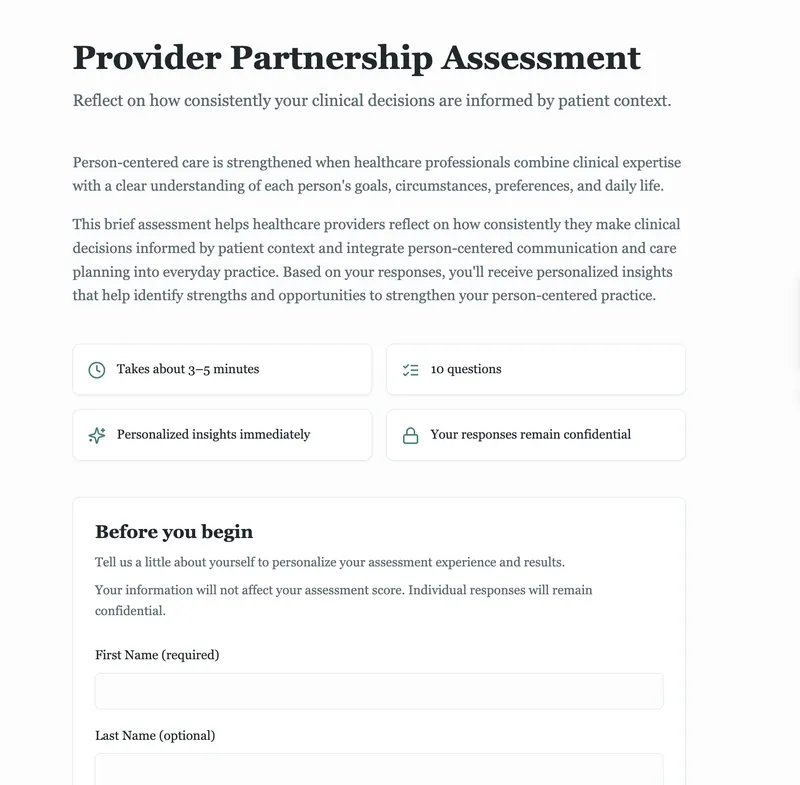
Provider Partnership Assessment
Reflect on how you approach communication, decision-making, and partnership with patients, and identify opportunities to strengthen person-centered care in practice.
Explore Resource (opens in a new tab)Consider how person-centered care can help create care plans that are realistic, practical, achievable, and responsive to each person's unique healthcare needs, goals, priorities, and circumstances.
The Health Guides, Visual Snapshots, and Clinical Practice Resources were reviewed by a physician for clinical accuracy and by other reviewers to improve readability, clarity, and ease of understanding.
Back to the Resource Hub